St Petersburg was built as a city on water, and for a time that was meant literally: there were as many boats and yachts here as carts, and Peter I handed out vessels to citizens and required them to learn to sail. The canals were not cut for beauty — they drained the marsh and served as roads. The Venice of the North was not a compliment but a description of daily life.
An hour along the rivers and canals is the quickest way to understand how the city works. Everything changes from the water: the embankments become the walls of a canyon, the palaces turn to face you with the fronts their guests arrived at, and the bridges pass directly overhead. The trip is private: your party alone, with a guide who talks to you rather than into a microphone for forty people.
What you will see
The Fontanka, the Moika and the Griboyedov Canal — the historic centre from the inside: the Summer Garden, the Mikhailovsky Castle, the Church on Spilled Blood from the water, palaces and tenement houses standing hard against the water’s edge.
The bridges and their superstitions — there are more than three hundred in the city, and almost every one has a reputation of its own: on one you kiss, on another you make a wish, and under one, so the legend goes, Valery Chkalov flew an aeroplane. Your guide will sort out what is true and what came from a film.
Chizhik-Pyzhik — the smallest monument in the city: 11 centimetres and five kilograms of bronze on the wall of the Fontanka by the 1st Engineer Bridge. Placed there in 1994 by Rezo Gabriadze, it alludes to the students of the School of Jurisprudence in their yellow-and-green uniforms. It has been stolen seven times since and returned every time. A coin tossed onto the plinth is for luck.
The Neva and the grand panorama — the passage out into open water: the Spit of Vasilyevsky Island with the Rostral Columns, the Peter and Paul Fortress, and the Winter Palace from the vantage point it was built to be seen from.
Why go with a guide
The city is handsome from the water on its own, but half the meaning is in the stories. In an hour you will hear how people lived in a city where water was the main street; and what it was like to be caught in the streets during a flood — there have been more than three hundred in three centuries, and in November 1824 the water rose 421 centimetres and drowned almost the whole centre, until the dam closed the city off in 2011. You will also find out whether there are prisons inside bridges, and why every bridge here has a character of its own.
The tour is private, and lasts an hour on the water. The navigation season runs roughly from late April to mid-November — outside it, the canal boats do not operate.
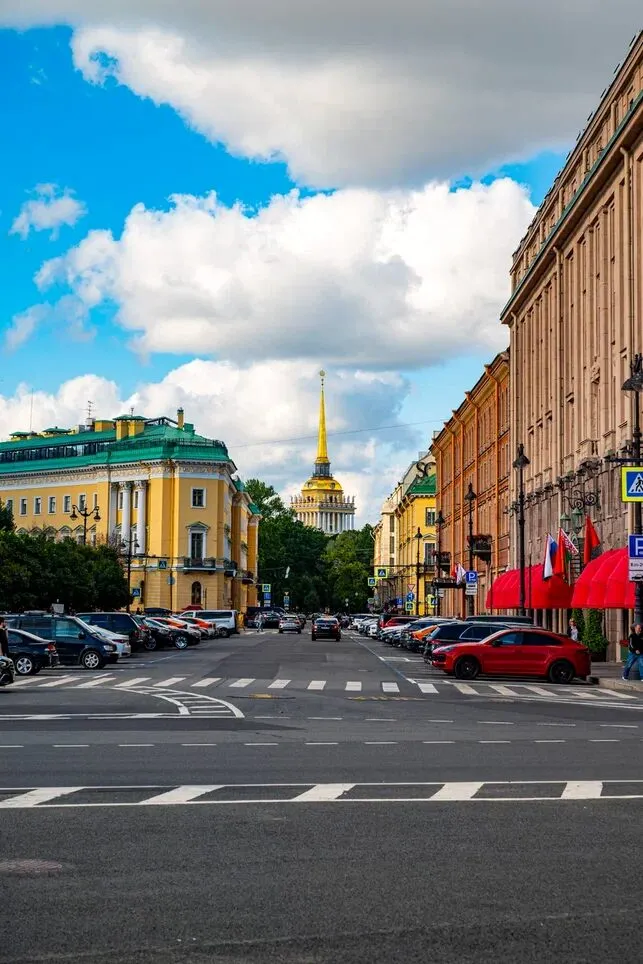
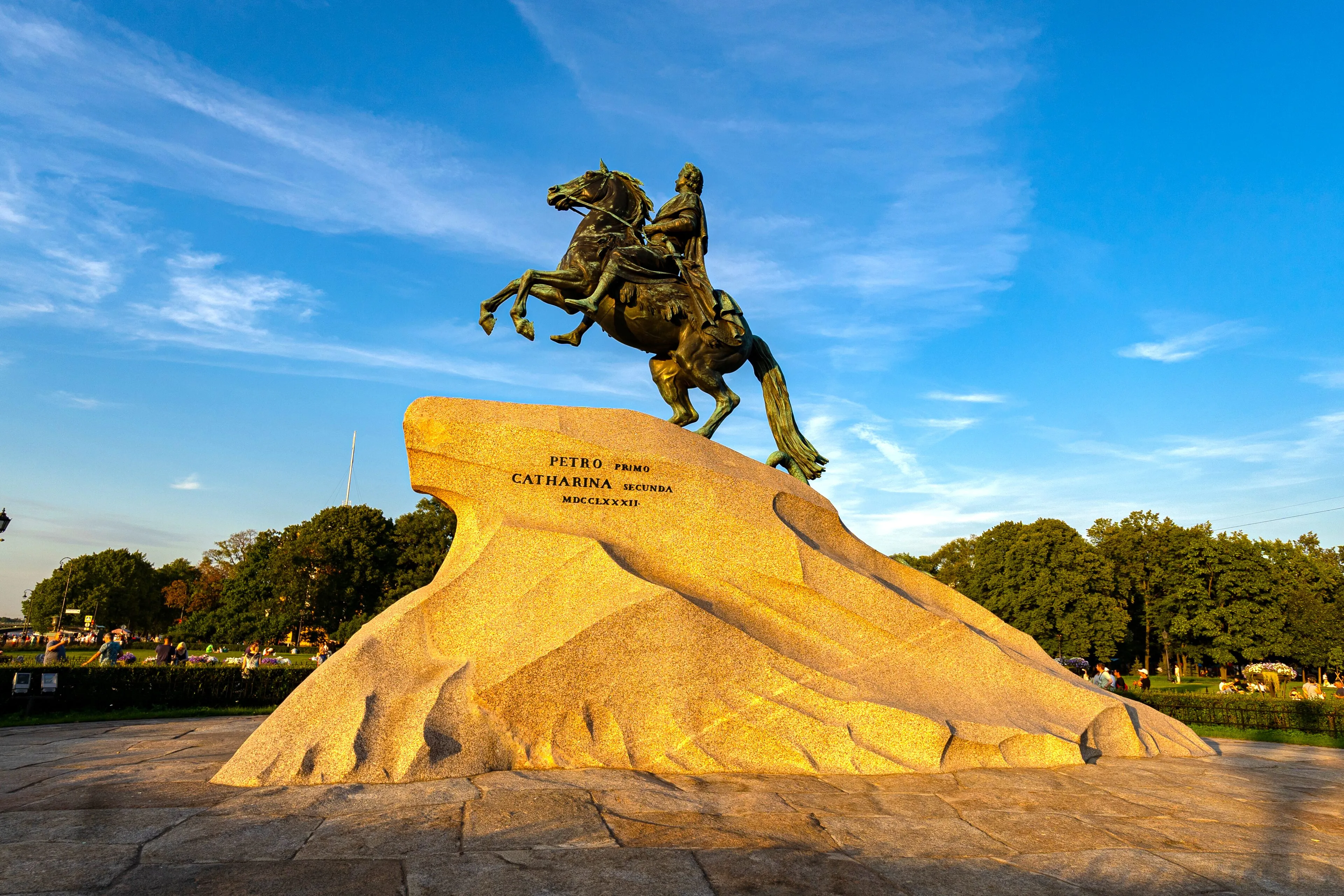
The essentials of St Petersburg in three hours: Palace and Senate squares, the Summer Garden and the Field of Mars, the Spit of Vasilyevsky Island and the place the city began — told through stories rather than dates.
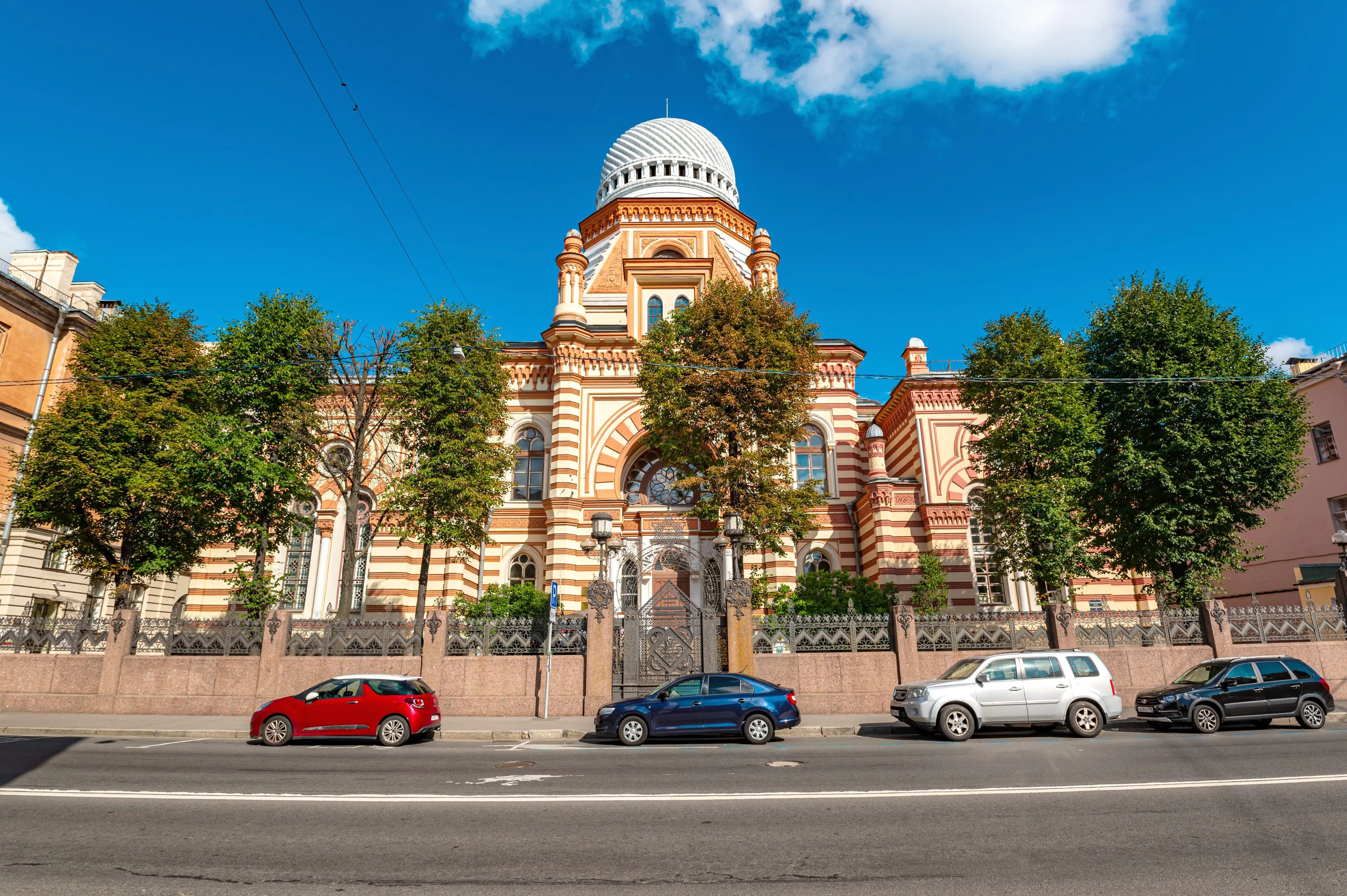
Jewish St Petersburg: the Grand Choral Synagogue in the Moorish style, the history of the community in the imperial capital, its bankers and philanthropists — and how it lives today.
On foot through the imperial capital: Palace Square, Nevsky Prospect and Gostiny Dvor, the well-yards behind the grand facades, and doughnuts in a historic cafe — two hours through the heart of St Petersburg.
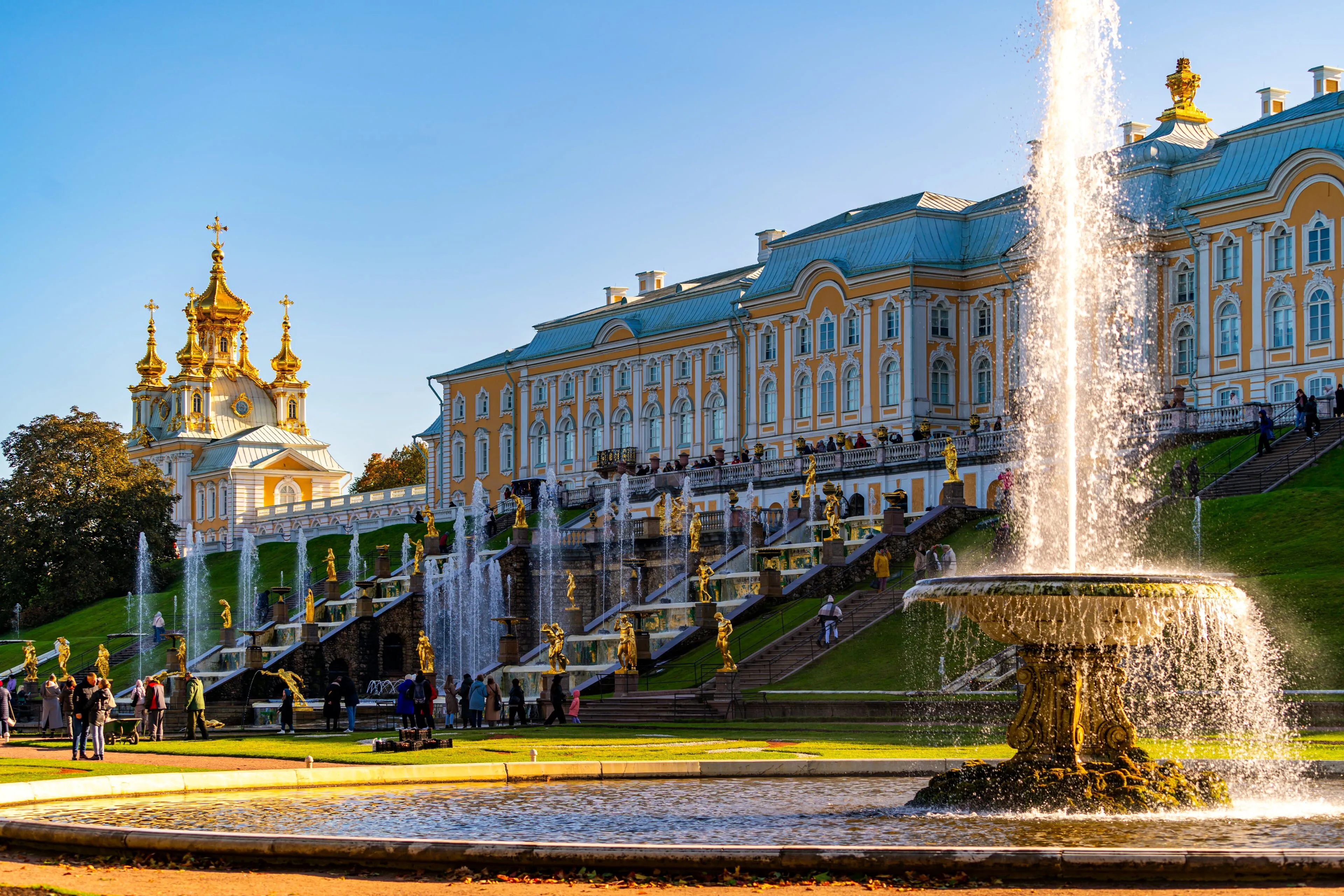
Two country residences in a day: the Catherine Palace with the Amber Room at Tsarskoye Selo, and the Lower Park at Peterhof with the Grand Cascade and Samson.