About the tour
St Petersburg was built as a shop window for an empire: with an eye on Europe, to a single design, and at record speed. In under a century a capital rose out of a marsh, with the widest ceremonial square, the country’s principal shopping street, and an architecture created by imported Italians, Frenchmen and Germans.
This walk covers its ceremonial centre — but not only that. We follow the route the city was conceived along: from the square where power displayed itself to the world, to the street where that same empire lived, traded and spent its money. And in between we turn off into the through-courtyards, where people generally do not go.
Two hours on foot, with no transport and no queues. We start at the Alexander Column on Palace Square.
What you will see
-
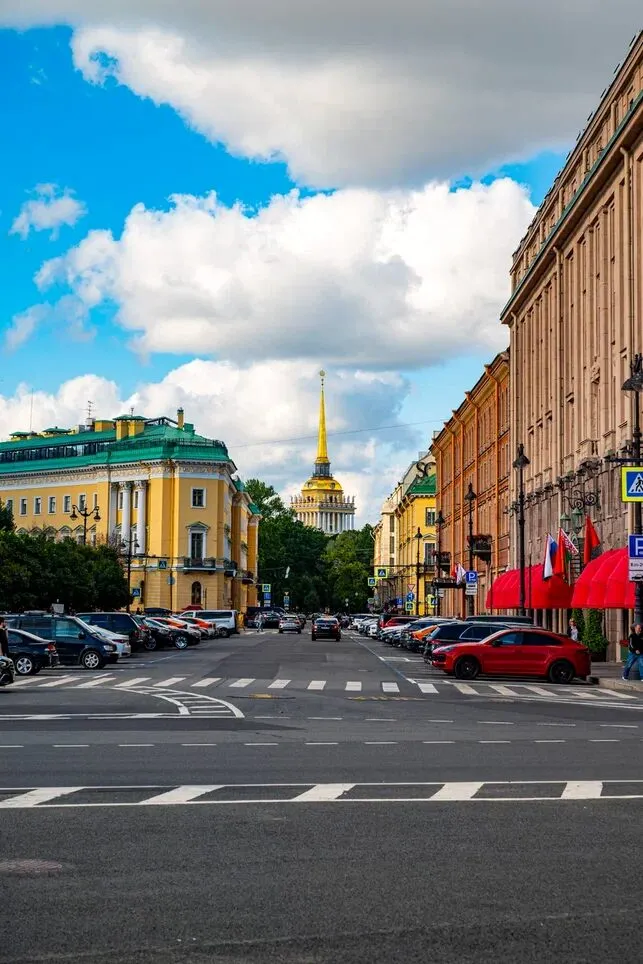
Palace Square — an ensemble assembled from three eras: Rastrelli’s baroque Winter Palace, the curve of the General Staff building with Rossi’s triumphal arch, and Montferrand’s Alexander Column marking the victory over Napoleon. The granite monolith is fixed by nothing and has held by its own weight alone since 1834.
-
Nevsky Prospect — 4.5 kilometres from the Admiralty to the Alexander Nevsky Lavra. It was cut from both ends at once: monks working from the Lavra, soldiers from the Admiralty. The two clearings failed to meet — hence the famous kink at Vosstaniya Square.
-
Kazan Cathedral — a semicircular colonnade of ninety-six columns facing Nevsky: a Russian answer to St Peter’s in Rome, and Kutuzov’s burial place.
-
The Singer Building — St Petersburg art nouveau with a glass dome and tower, built for the American sewing-machine empire and later the city’s principal bookshop.
-
The Stroganov Palace — the only surviving Elizabethan baroque palace on Nevsky, also by Rastrelli.
-
The Great Gostiny Dvor — a trading quarter that took Vallin de la Mothe nearly a quarter of a century, from 1761 to 1785. The trading rows were named after the goods sold in them, gas lighting arrived in the 1840s, and during the 1967 reconstruction eight gold ingots weighing 128 kilograms in total were found inside the walls.
-
The Anichkov Bridge — Klodt’s four bronze groups on the taming of the horse, one of the great sculptural series of the city.
-
The well-yards and the Capella courtyards — the reverse side of ceremonial St Petersburg: cramped shafts, through-passages and silence two steps from Nevsky.
Why go with a guide
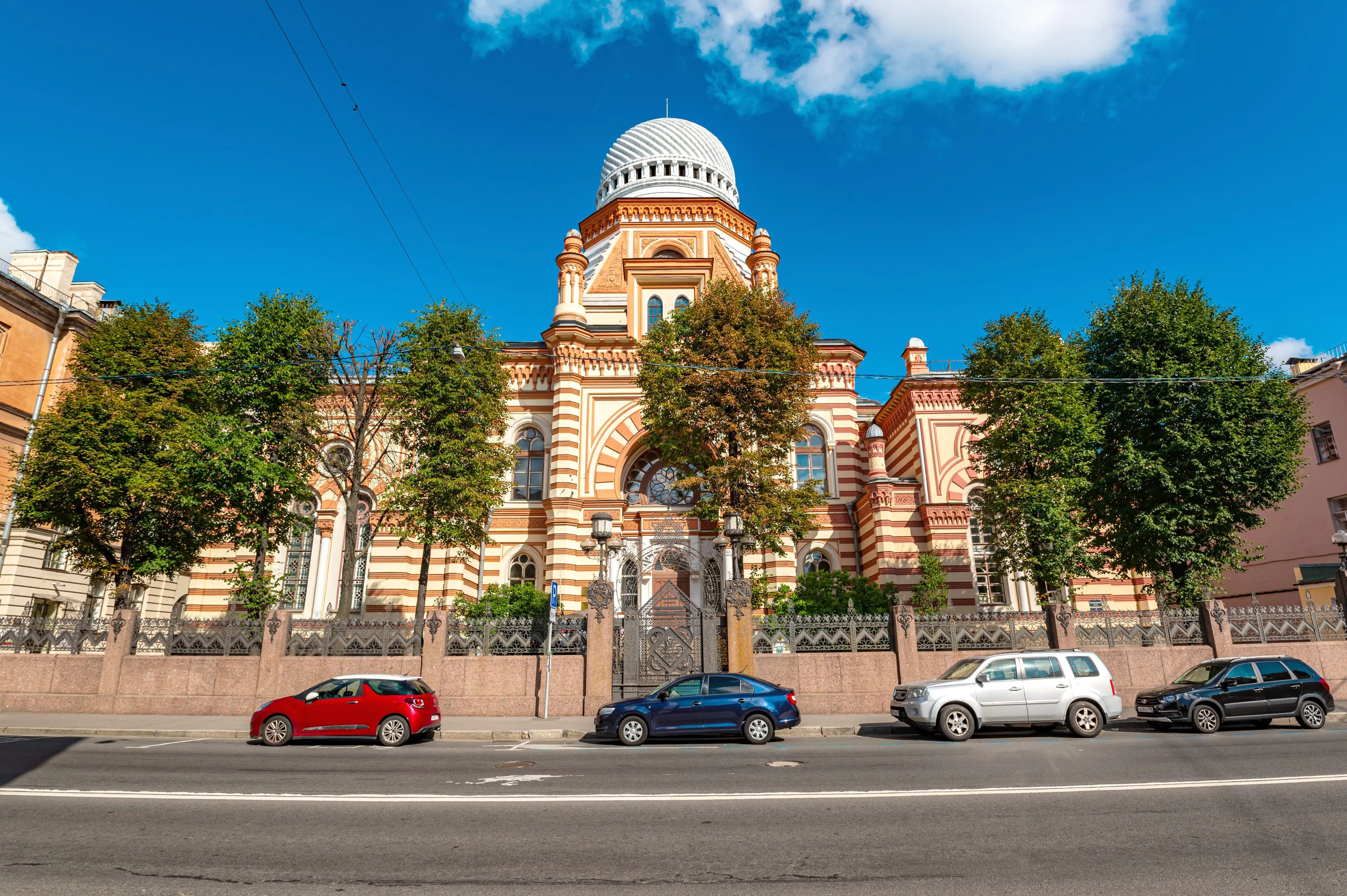
You can walk the centre of St Petersburg by yourself, but the facades say nothing. A guide explains how three different eras came together into the single ensemble of Palace Square, why contemporaries regarded the Church on Spilled Blood as a town-planning failure, why one street holds so many churches of so many faiths, and why the capital was founded in this climate at all.
Along with it come the stories that are not on the plaques. What Palace Square saw in January 1905 and October 1917. Why, by the end of the nineteenth century, 29 of the city’s 64 banks operated here, and how Russia’s first tramway ran from this spot in 1907. Which icon is said to have saved Leningrad during the Siege, and where to look for the city’s “Orbit”. We will also puncture a couple of the standard urban legends along the way.
The through-courtyards are an argument in themselves: without someone to lead you, they are simply not findable, and half of them are closed to the passer-by.
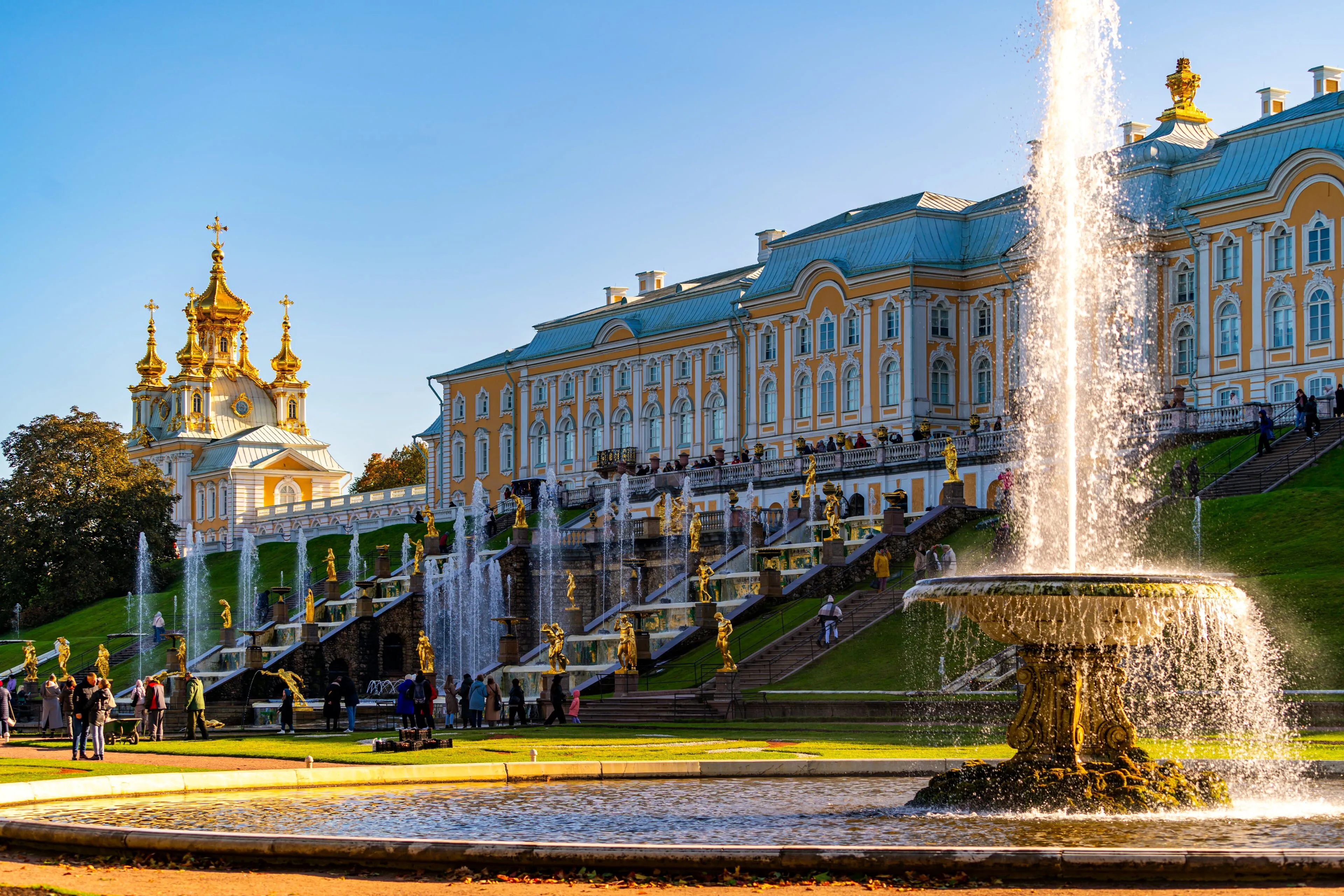
The tour is private, the pace unhurried, and the route adjusts to you. We stop for doughnuts at a cafe that has been trading since Soviet times. One further thread of the walk is where the imperial court went for the summer: Peterhof with its fountains and Tsarskoye Selo with the Catherine Palace — both reachable on separate tours.