The Hermitage began in 1764 with a purchase: Catherine II acquired a collection of 317 paintings from the Berlin merchant Johann Gotzkowsky. By the end of her reign the palace halls held some four thousand canvases. The public was not admitted until 1852, when Nicholas I built the collection a building of its own, the New Hermitage.
Today the museum complex is six connected buildings on Palace Embankment, 365 halls and around three million objects, from the Stone Age to the twentieth century. If you paused a minute at each, the walk would take several years. Which is why the Hermitage is a place to enter with a route, and with someone who knows it.
Our tour is two and a half hours along the principal route: the state interiors of the Winter Palace and the best of the painting collections. We begin on Palace Square, before going into the museum at all, with an account of how the square came together as an ensemble and what the Winter Palace meant to the imperial family.
What you will see
The Jordan Staircase — the main way into the state apartments: Rastrelli’s baroque, gold, mirrors, columns and a painted ceiling. After the fire of 1837 the staircase was restored by Vasily Stasov, who kept his predecessor’s design.
The state enfilade — the Field Marshals’ Hall, the Peter the Great Hall, the Armorial Hall and St George’s Hall, where state ceremonies and imperial receptions took place.
The 1812 Military Gallery — more than three hundred portraits of the generals who defeated Napoleon, painted by George Dawe and his workshop.
The Pavilion Hall of the Small Hermitage — crystal chandeliers, a mosaic floor, a view onto the Hanging Garden, and the Peacock Clock: a mechanical automaton by James Cox, Potemkin’s gift to Catherine II. It is the only large eighteenth-century automaton to reach us in working order.
Italian art — six centuries of painting and sculpture: Leonardo da Vinci’s Benois Madonna and Litta Madonna, Giorgione’s Judith, Caravaggio’s Lute Player, work by Titian, Raphael, Veronese and Tiepolo, and the Crouching Boy, the only sculpture by Michelangelo in Russia.
The Raphael Loggias — an exact copy of the Vatican gallery, commissioned by Catherine II and reproduced on the banks of the Neva down to the last biblical scene on the vaults.
Spanish painting — one of the largest collections outside Spain: El Greco, Velázquez, Zurbarán, Murillo, Goya.
The Dutch and Rembrandt — from the little Dutch masters to the Rembrandt room, where the early canvases stand alongside the late portraits and everything culminates in The Return of the Prodigal Son, one of the museum’s supreme works.
Why go with a guide
The Hermitage is the case where, without someone to lead you, it is easy to spend two hours moving between floors and miss half of what matters. A guide takes you along a tested route and tells you what the museum labels do not.
How the whole Winter Palace burned out over a few days in December 1837, and why it was possible to rebuild it in fifteen months. How more than a million objects were taken out of the museum in the first weeks of the war, while tours of the empty frames were given from memory in besieged Leningrad. What left the collection through Western auction houses in the 1930s. And why the palace cellars are still guarded by cats, officially on the museum’s staff since a decree of Empress Elizabeth.
The tour is private, for up to six people: your guide works with your party alone and adapts the route to your interests, so you can linger over favourite painters, go deeper into antiquity, or put the emphasis on the palace interiors. Tickets are included in the price and we go in without joining the general queue. When the tour ends you are free to stay in the galleries and carry on by yourself.
Meeting point
The Alexander Column on Palace Square
Price includes
First-class guide
Entrance tickets to the Hermitage, skipping the queue
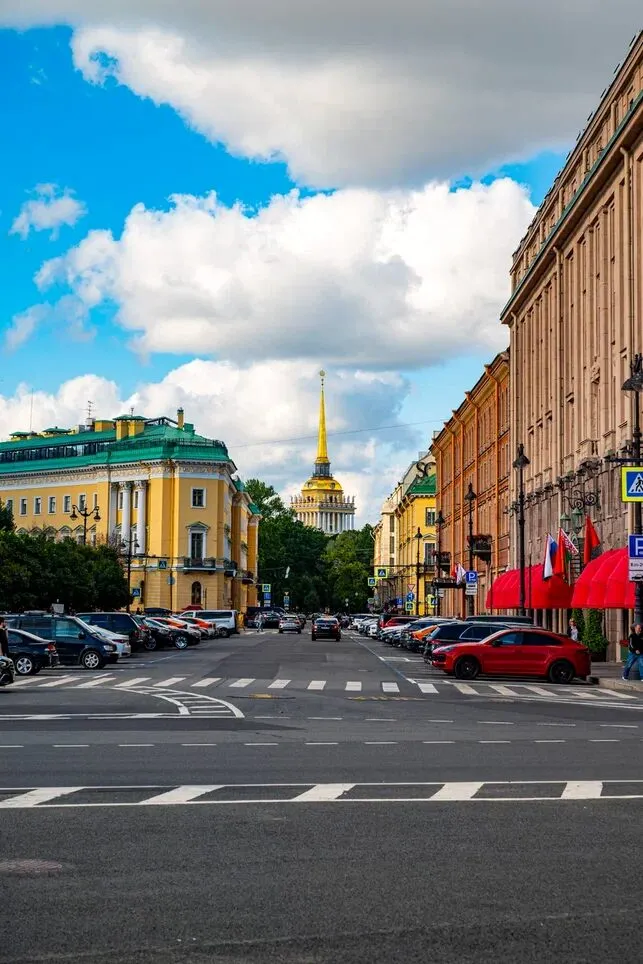
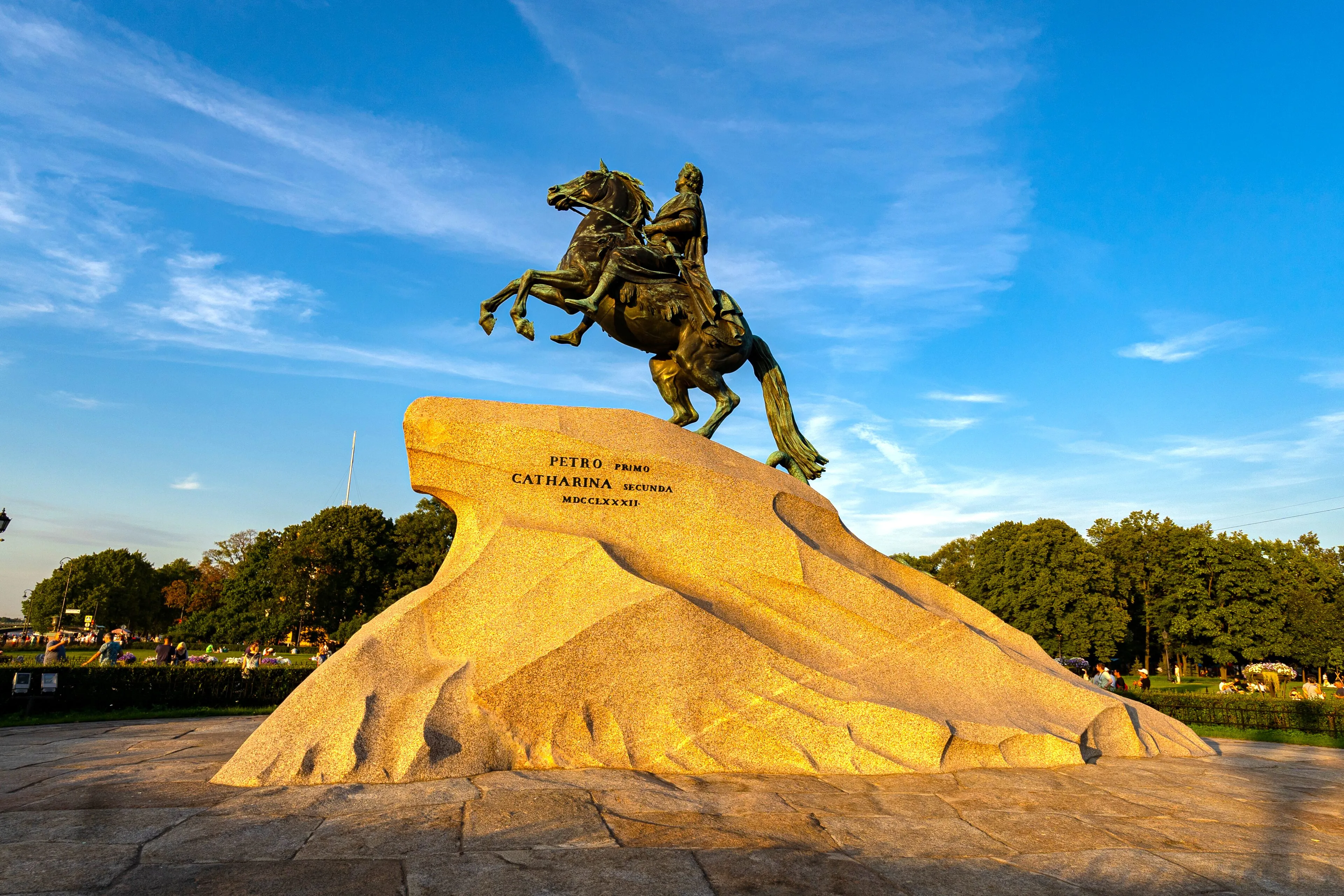
The essentials of St Petersburg in three hours: Palace and Senate squares, the Summer Garden and the Field of Mars, the Spit of Vasilyevsky Island and the place the city began — told through stories rather than dates.
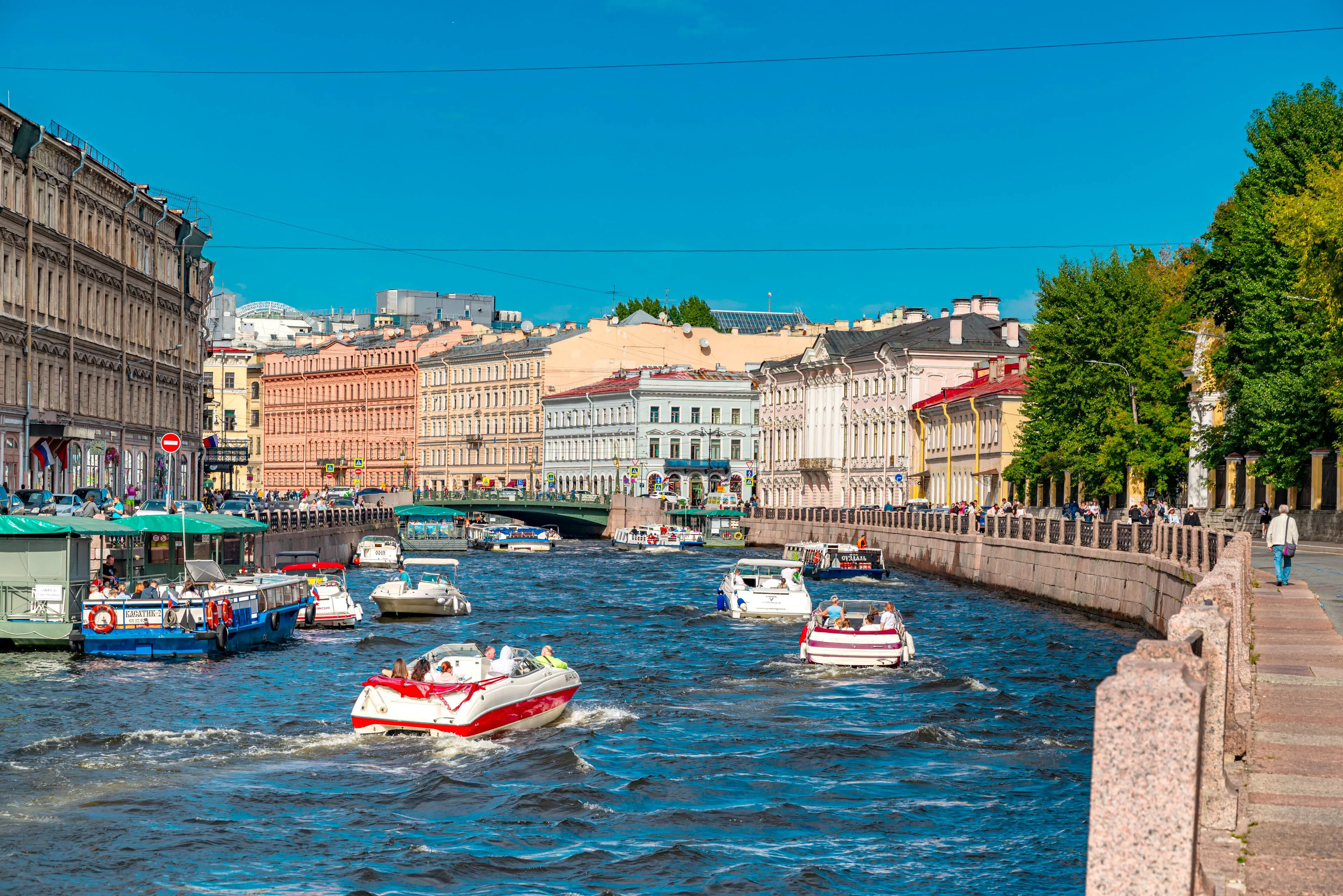
An hour along the rivers and canals with your own guide: the Venice of the North from the water, the bridges and their superstitions, Chizhik-Pyzhik, and the floods that reshaped the city.
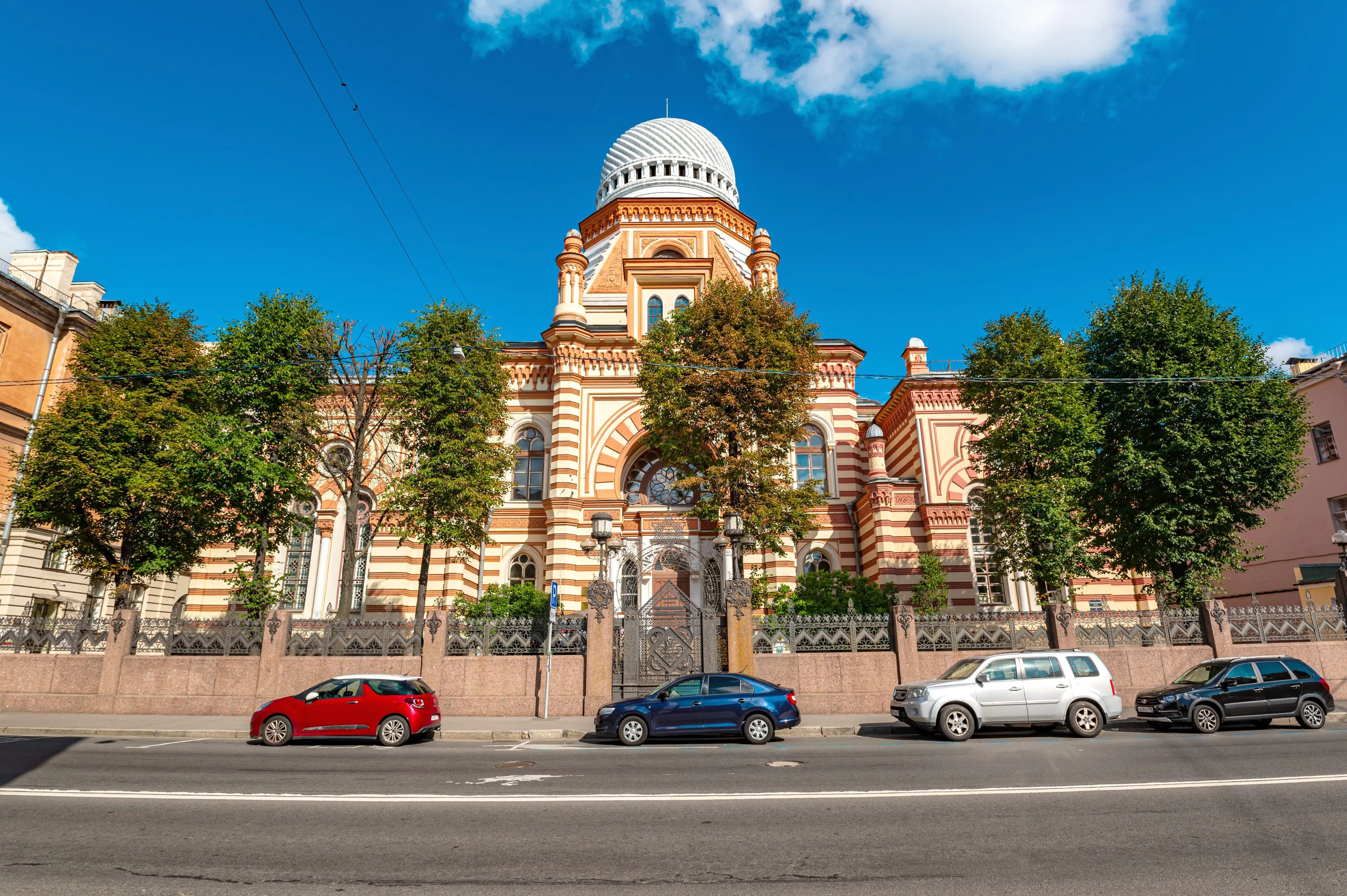
Jewish St Petersburg: the Grand Choral Synagogue in the Moorish style, the history of the community in the imperial capital, its bankers and philanthropists — and how it lives today.
On foot through the imperial capital: Palace Square, Nevsky Prospect and Gostiny Dvor, the well-yards behind the grand facades, and doughnuts in a historic cafe — two hours through the heart of St Petersburg.